Total Return Chart (T Chart)
Last changed 05/10/99
The T Chart Shows Price Change and Total Return
Total return is not the same thing as price change. Total return takes into
consideration:
- The reinvestment of cash dividends to buy more shares.
- The reinvestment of capital gains to buy more shares.
- The value of rights offerings (usually closed-end funds).
- The value of distribution of shares of stock in another company. For example, the value
of Lucent shares paid to AT&T shareholders in October of 1996. When companies spin off
or merge, our data shows the return to a shareholder of the original issue if he
liquidated newly distributed shares and simultaneously bought after-distribution shares
denoted by the original ticker symbol.
Price Changes and other Statistics are Found in the Performance Values
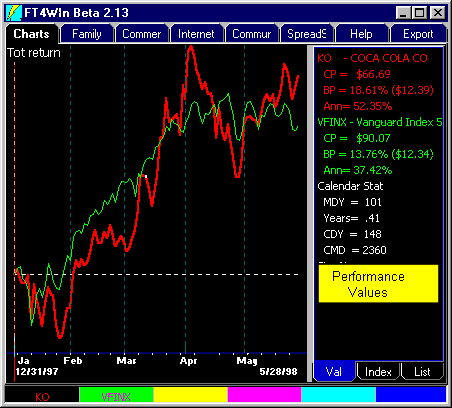
The Total Return Chart shows 1 to 6 lines. Each line is color-coordinated with performance values. The white performance value are "Calendar
Statistics" telling you the number of market days, calendar years, etc. displayed.
|
|
|
On the T Chart
The lines all originate from the starting point of 0% return at the dashed white line.
There are NO prices scales shown. Everything is drawn on a percent return basis.
The horizontal, white, dotted line is the point of 0% return. All lines originate from
the zero gain point. The chart scale is a percentage gained or lost from the starting
point. The chart is not scaled by prices of any of the lines.
|
|
Distributions
White dots appear occasionally on the lines and show where an issue has made a
distribution. To see distribution information, put the Dashed Pole
on the date corresponding to the dot. For more information, see Distribution information. Total return reflects the effect of
distributions as well as the price changes. See the pole
|
Logarithmic or Arithematic Scale?
You have your choice of displaying the T Chart on a log or arithematic scale. Log scale
is best when you are drawing trendlines. Arithematic is best when you want to see the true
dimensions of recent price movement.
Changing the Issues on the Chart
There are many ways to change issues.